Every Word: De Zerbi on Kulusevski, Mudryk and Marmoush
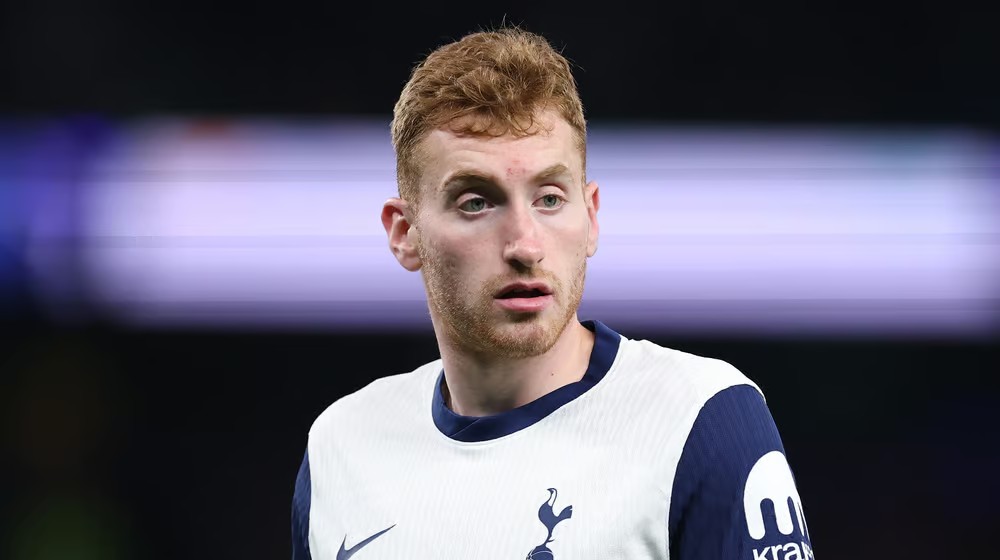
How is Dejan Kulusevski progressing?
Kulusevski started with us in the beginning of the week, and then the last two days, a small, small problem stopped him, but I think he’s in a good way. It’s going very well.
I already said the medical staff is very high level. So I think we can be positive with him. I’m looking forward to having Deki in the squad.
Will that problem keep Kulusevski out of training for long?
No, no. Nothing of importance.
Could James Maddison play against Nottingham Forest?
I think no, because after two days after the problem with Brentford and another two weeks out, it’s not the right moment.
What happened between you and Richarlison?
You don’t know one important thing. At the beginning of pre-season, I spoke to Richarlison and asked him if he wanted to extend his contract because I was happy to keep him with us, and he didn’t want to.
Richarlison is a good player. He was important last season. He’s a good guy, but in the end, I had to stop myself putting pressure on the players if they show me they want to leave.
So I’m sorry for him, but we have to go to another page and work with Dominic Solanke and Omar Marmoush.
Did Richarlison have an acceptable offer to leave?
If a player says, ‘I want to leave, I want to leave, I want to leave,’ you have to have an offer behind you—otherwise, what are you doing?
And the right offer for him, I think, arrived after the transfer market closed. We received an offer before the transfer market closed and he didn’t accept.
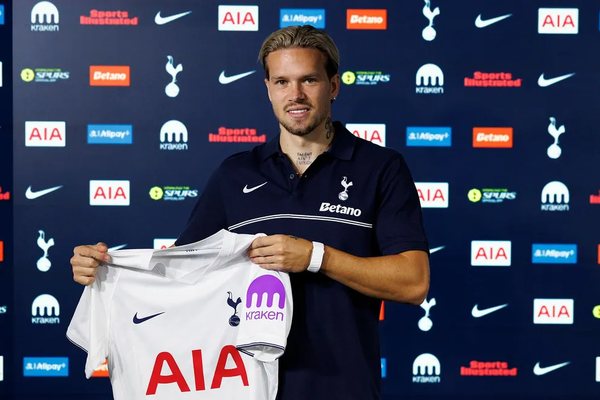
What is your history with Mykhailo Mudryk, and what happened to him at Chelsea?
I brought him from the Under-21s. I put him in the first team. I gave him the chance to play against Real Madrid in the first XI in the Bernabéu.
He was very, very young—20 years old. He played well. It was the first season for him in the first team. He played very well; sometimes he played not so well, but it was a way to do it.
And then, from Shakhtar to Chelsea, I think he paid a big price because: different leagues, different countries, a different level of club, with a big, big responsibility because he knew the price Chelsea paid for him.
But it’s a normal process for a potential top player. Now I think he’s 25. He’s in the right moment of his career, in a top club. I think it’s the right moment for him to show what he can do.
Could reuniting with you help Mudryk fulfil his potential?
I hope it can be the key for him, but Mudryk—he loves football. He lives for football. I have not seen many players like him with the mentality, as a belief, in the work during the week in training. He works double compared to other teammates.
Maybe during the game he has to be focused on the ball, on the play, and he has to ask himself something more because his qualities are more than he showed until now.
I know him as a guy, as a player. I think it is very important about the motivation, and then we will see during the season if he respects his talent and what he is able to do.
Was Mudryk always a transfer option, or did the idea emerge at the last minute?
No, in the last days. Not the last minute, but the last days.
Are you concerned that Tottenham could revive Mudryk’s career only for him to return to Chelsea?
Yes, but I can’t decide the modality of the negotiation in the transfer market. In that moment, we needed one player on the left wing because we have just Mathys Tel and Mudryk.
I think he is the right player, especially in that moment of the transfer market. He wanted to come. He accepted because he had another couple of offers, and I think it’s a good solution.
How do you plan to use Omar Marmoush?
He’s a good player, and we will see in the season. Normally, if you consider the striker a big animal, he’s not an animal, but he has different characteristics.
At Eintracht Frankfurt he played as a striker. He loves playing as a striker, but he is a different striker than Richarlison.
We have to play with the ball on the grass, short-pass combinations, attack the spaces very well to use Omar for his characteristics.
Have Tottenham lost too much physicality, particularly for set pieces?
Yes, but we have Solanke, we have the centre-backs with physicality, and then, listen, to defend the set pieces, first of all, you have to have blood and the right speed to defend because sometimes it’s the duel.
You don’t have to lose all duels because you are smaller than the opponent. We have Allan Dixon. We can put Allan Dixon in the set pieces on the pitch, if you want?
But I think if you don’t have the spirit to fight in the duels, this part makes the difference. Also the structure, the physicality, for sure.
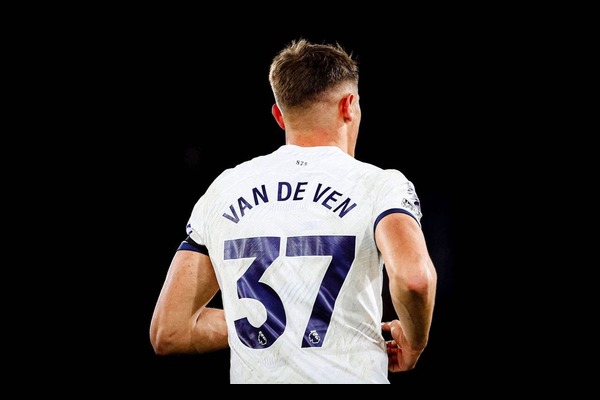
But we have JP van Hecke, we have Van de Ven, we have Udogie, we have Bentancur, we have Solanke. Gallagher is very good in the set pieces. Why? Because he fights.